

Ransomware Keeps Targeting Factories: 5 Steps to Protect Your CNC Systems
Your CNC machine just stopped mid-cycle. The control screen is locked. There's a message demanding £50,000 in Bitcoin to unlock your production data.
This isn't a hypothetical scenario anymore.
Manufacturing ransomware attacks surged by 87% year-over-year, with factories now accounting for 26% of all ransomware incidents in 2024-2025. Your CNC shop isn't just another business to cybercriminals, it's a prime target with exactly what they want: proprietary G-code, custom toolpaths, and intellectual property worth thousands on dark web marketplaces.
The question isn't whether attackers will try. It's whether your systems can stop them.
Why CNC Shops Are Ransomware Magnets
You need to understand what makes your factory floor so attractive to attackers.
First, production downtime equals immediate revenue loss. When your CNC machines go dark, you're not just dealing with an IT inconvenience, you're watching contracts slip away and customers lose confidence. Attackers know this. They know you'll pay to get back online fast.
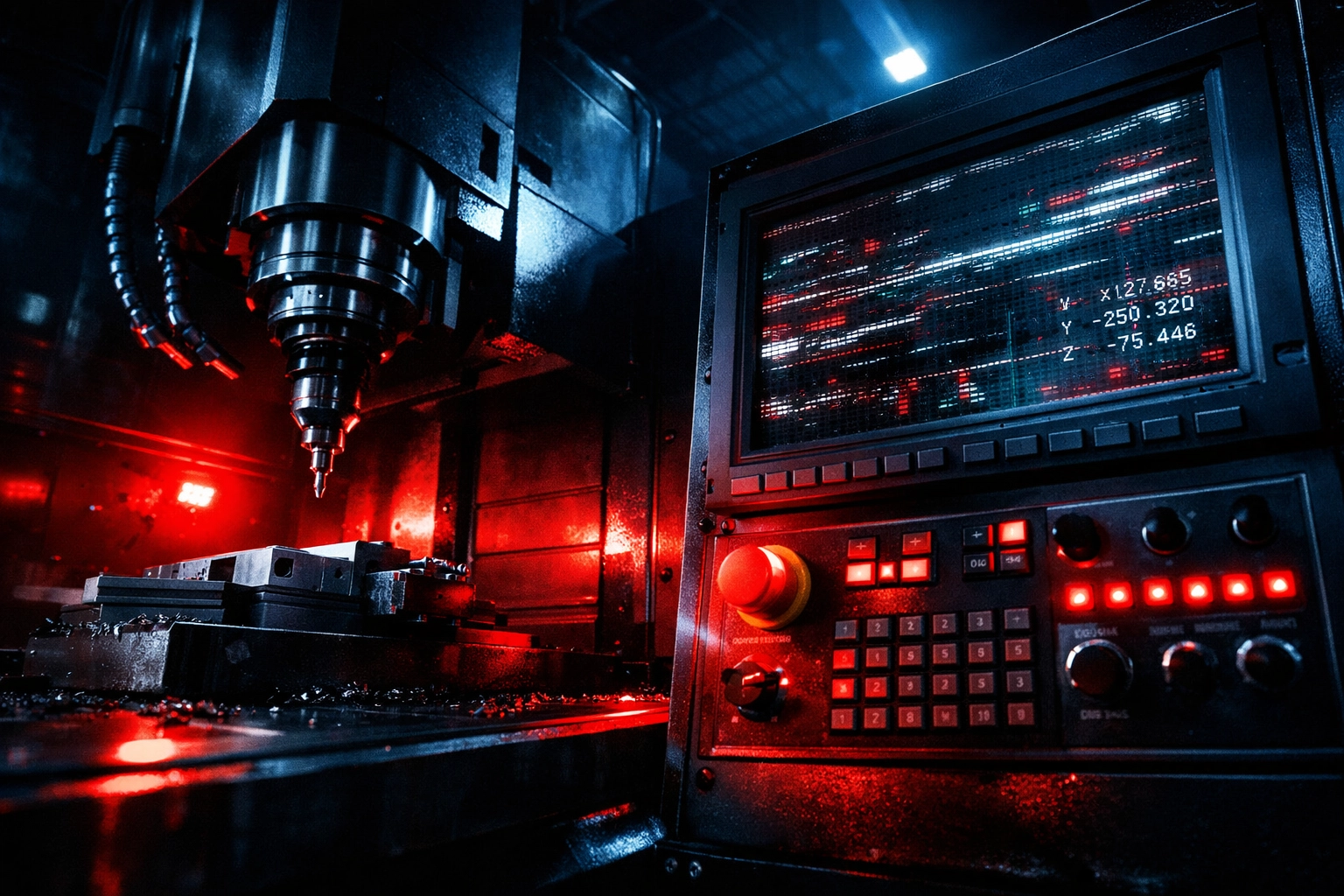
Second, your CNC controllers hold valuable intellectual property. Custom toolpaths, proprietary machining programmes, and years of manufacturing refinement are stored directly on your shop floor equipment. This data commands premium prices from competitors and industrial espionage networks.
Third, legacy systems create security gaps. Many CNC controllers run outdated operating systems that can't receive security patches. Your Haas machine from 2015 might still be running Windows XP embedded. Your Mazak controller might be using software that predates modern cybersecurity standards entirely.
Fourth, USB ports provide direct access. That convenience of loading programmes via USB stick? It's also the easiest entry point for malware. One infected thumb drive from a supplier or contractor can compromise your entire production network.
The Real Cost of a Factory Floor Attack
Let me be clear about what happens when ransomware hits your manufacturing operation.
Production stops immediately. Not "slows down", stops. Your CNC machines lock. Your automated cells halt. Your entire facility goes silent whilst you scramble to understand the scope of the breach.
You're facing downtime measured in days, not hours. Recovery isn't quick. Even with backups, restoring CNC programmes, recalibrating machines, and verifying system integrity takes time you don't have.
Customer contracts are at risk. Missing delivery deadlines isn't just bad service, it's breach of contract. Legal exposure multiplies whilst your machines stay dark.
Your reputation takes a permanent hit. Word spreads fast in manufacturing circles. Being known as "that shop that got hit by ransomware" affects future business opportunities.
5 Essential Steps to Protect Your CNC Systems
Here's what you need to implement now, not eventually, now, to protect your production environment.
1. Implement Network Segmentation and Isolation
Separate your CNC controllers and production equipment from your business systems using segmented VLANs and firewalls.
Think of it as building a firewall between your office and your shop floor. When an attacker compromises someone's office computer through a phishing email, network segmentation stops them from pivoting directly into your factory equipment.
Block all outbound internet access from CNC machines. Your machines don't need to browse the web or check email. Limiting their network communications to only what's operationally necessary prevents command-and-control connections that ransomware uses to encrypt your files.
2. Disable and Restrict USB Ports
USB ports on CNC controllers are frequent vulnerability vectors. You need to disable unrestricted USB access entirely or limit it to authorised personnel with pre-approved, encrypted devices only.
Yes, this creates some operational friction. You'll need to establish proper change control procedures for loading new programmes. The alternative, one infected USB stick taking down your entire shop, is far worse.
Consider implementing USB port locks, encrypted USB-only policies, or dedicated programme loading stations that scan all media before transfer to production equipment.
3. Enforce Strong Access Controls and Multi-Factor Authentication
Default passwords on shop floor equipment are a liability. "Admin/Admin" or "1234" might seem convenient, but they're an open invitation to attackers.
Implement multi-factor authentication for all remote access to CNC equipment. If you're allowing technicians or engineers to connect remotely, they need more than just a password to prove their identity.
Enforce least-privilege credentials. Each user or process should have only the access they strictly need, nothing more. Your shop floor operator doesn't need administrator rights. Your maintenance technician doesn't need access to every machine on the network.
4. Deploy Immutable Backups
Here's the critical difference: regular backups versus immutable backups.
Regular backups can be encrypted by ransomware. Attackers specifically target backup systems because eliminating your recovery option increases the likelihood you'll pay the ransom.
Immutable backups cannot be encrypted or modified once created. They're offline, physically separate from your production network, and ransomware-proof.
Back up your CNC programmes, machine configurations, and critical production data regularly to immutable storage. Store these backups in a location that's physically and logically isolated from your network. When ransomware hits, you can recover without paying a penny.
5. Monitor Continuously and Manage Vendor Risk
Implement continuous monitoring of CNC network traffic and system behaviour. Anomalous activity, unexpected network connections, unusual file access patterns, unauthorised login attempts, needs to trigger immediate alerts.
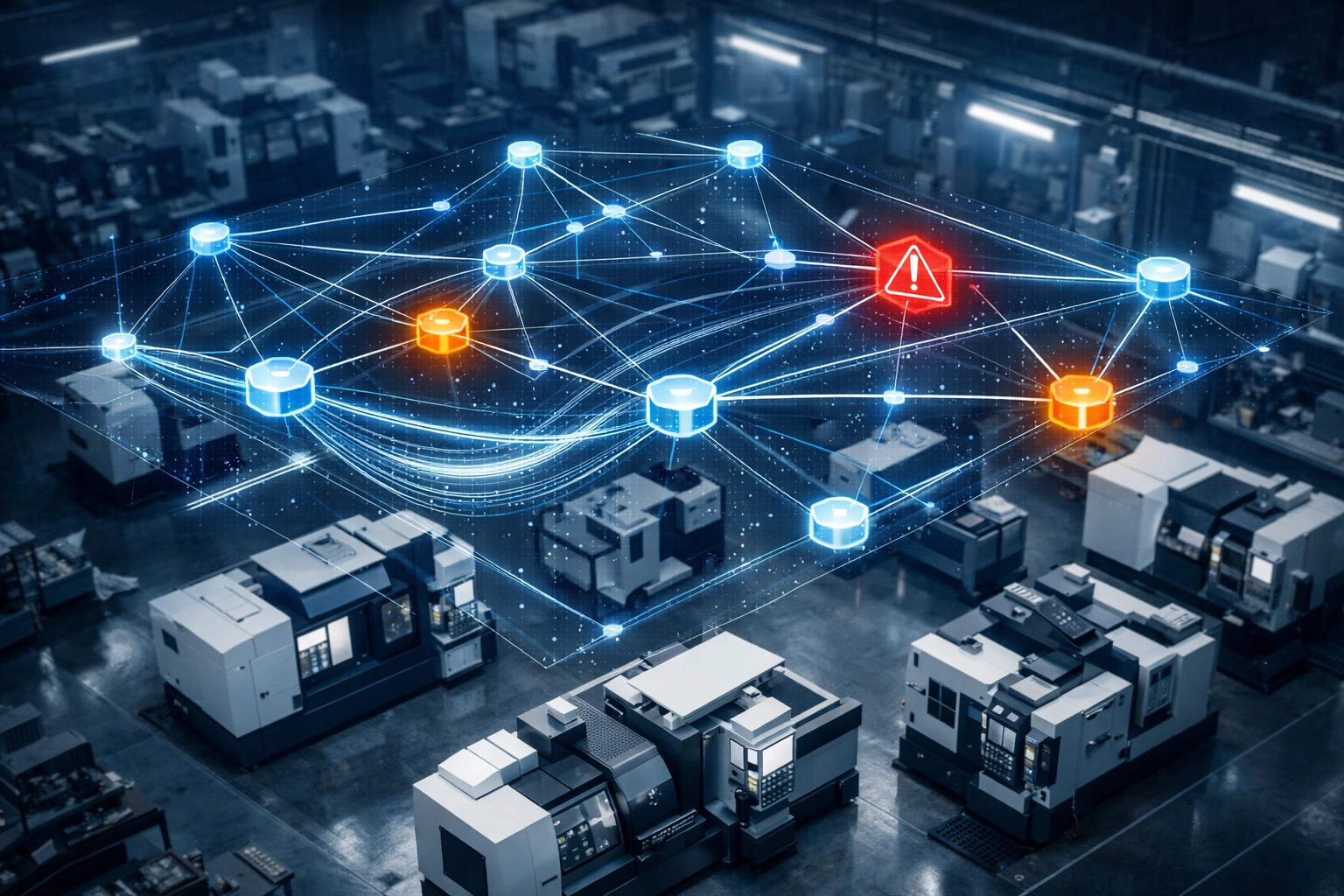
You can't manage what you don't measure. Visibility into your production network activity is essential for early detection.
Conduct vendor risk assessments for all suppliers with network access. Compromised suppliers remain a primary infiltration method for attackers. Your CAD/CAM software provider, your machine tool OEM support technician, your automation integrator, they all need security vetting before connecting to your systems.
Additional Protection for Legacy Systems
Many manufacturing facilities still run unsupported operating systems that cannot receive security patches. If you can't upgrade, you need to isolate.
Use air-gapped networks or dedicated firewalls to separate non-patchable legacy systems from the rest of your infrastructure. These machines should have zero internet connectivity and minimal network exposure.
Consider virtualisation or hardware upgrades for critical legacy controllers. Yes, there's upfront cost. Compare that to the cost of ransomware shutting down production for a week.
Get Your Manufacturing Tech Health Check
Your CNC systems face increasingly sophisticated threats from organised ransomware groups specifically targeting manufacturing operations.
The five steps outlined here: network segmentation, USB restrictions, access controls, immutable backups, and continuous monitoring: form the foundation of a robust defence strategy. But implementation requires expertise in both industrial control systems and cybersecurity.
Drive Network Support specialises in protecting manufacturing environments. We understand the unique requirements of CNC operations, the constraints of legacy equipment, and the critical importance of minimising production disruption.
Book a 15-minute Manufacturing Tech Health Check to assess your current vulnerabilities and identify specific improvements for your facility. We provide extended-hours specialist support for critical CNC and IT issues, ensuring you've got expert assistance when production problems emerge.
Call +44 204 620 4478 to speak with Rachel and schedule your assessment, or visit our services page to learn more about our manufacturing IT support capabilities.
Don't wait for an attack to expose your vulnerabilities. Protect your production, protect your intellectual property, and protect your business continuity( starting today.)